

2 min read
Lake Forest December 2024 Kitchen Remodel
At Kitchen Cabinets and Beyond, we are dedicated to creating kitchens that blend elegance, functionality, and timeless style.
By Kitchen Cabinets and Beyond · Published November 4, 2026
Quartzite vs. quartz is a question of nature against engineering: quartzite is a natural stone, a metamorphic rock made almost entirely of the mineral quartz, while quartz countertops are a manufactured surface made mostly of quartz bound with resin. They sound alike because they share a mineral, but they are quarried versus made, sealed or not sealed depending on the stone versus never sealed, and natural in pattern versus designed. If you are choosing between them, start with how much natural variation you want and how much care you are happy to give.
Engineered quartz is what most of our worktops are, and we also supply and install natural stone, including granite, marble and quartzite, so both are on the table. Here is how they differ, with every material fact linked to the source that states it.
The Natural Stone Institute’s consumer site, Use Natural Stone, defines quartzite as a metamorphic rock made almost entirely of the mineral quartz. It begins as sand grains that compress into sandstone, and with enough heat and pressure deep underground the grains fuse into a dense, durable rock.
The same guide notes that the mineral quartz sits at 7 on the Mohs hardness scale, which makes it harder than glass and harder than a knife blade, and that true quartzite will not etch from everyday kitchen acids such as lemon juice or vinegar. It also points out that the mineral it is talking about is not the composite countertop material that is also called quartz, which is exactly the confusion this article is about.
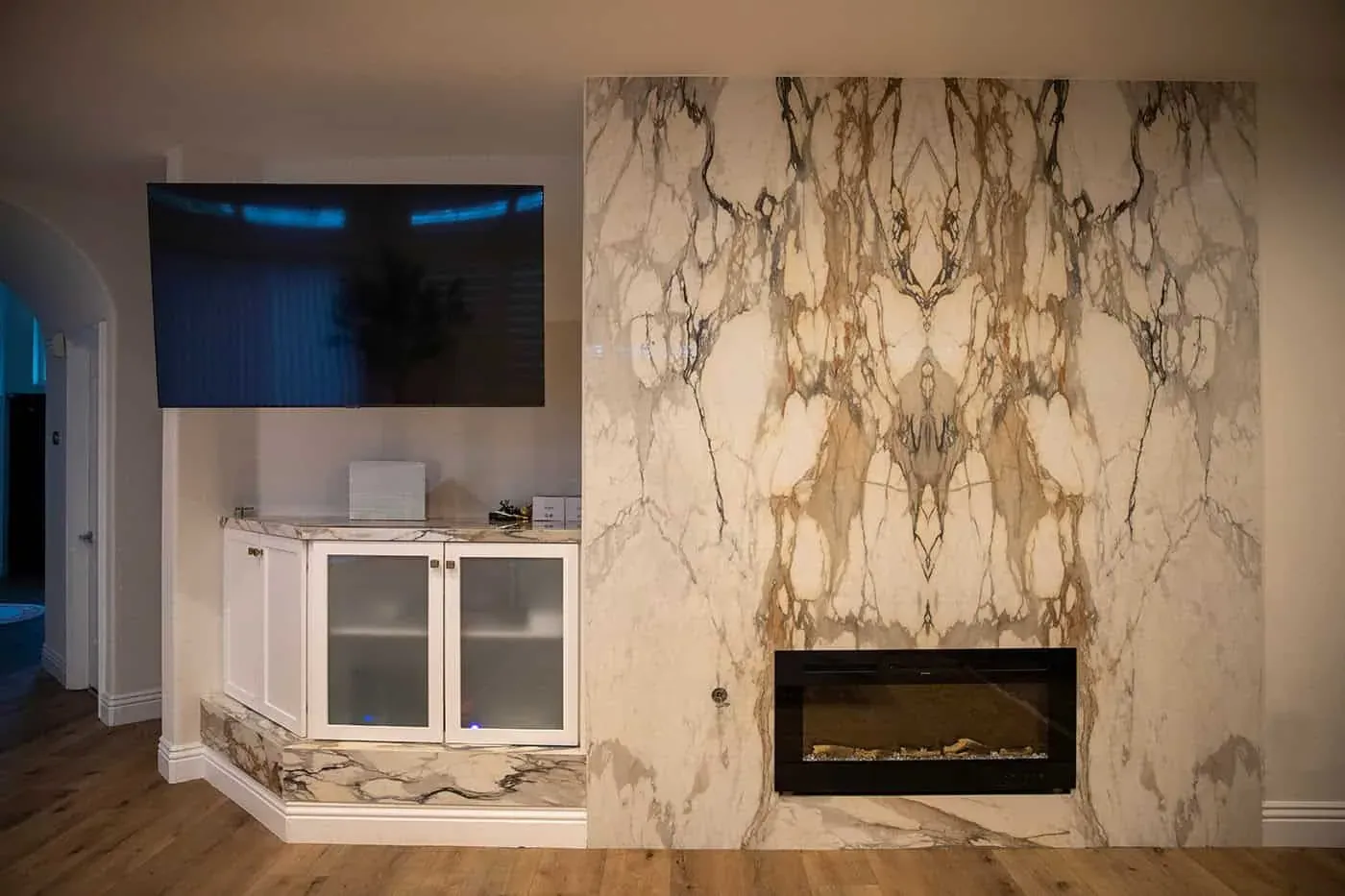
Visually, quartzite is often chosen for a look close to marble. The institute’s quartzite care article describes a look “often similar to marble and a durability comparable to granite,” and notes that most quartzites are white or light-colored, with vivid colors appearing where other minerals are present.
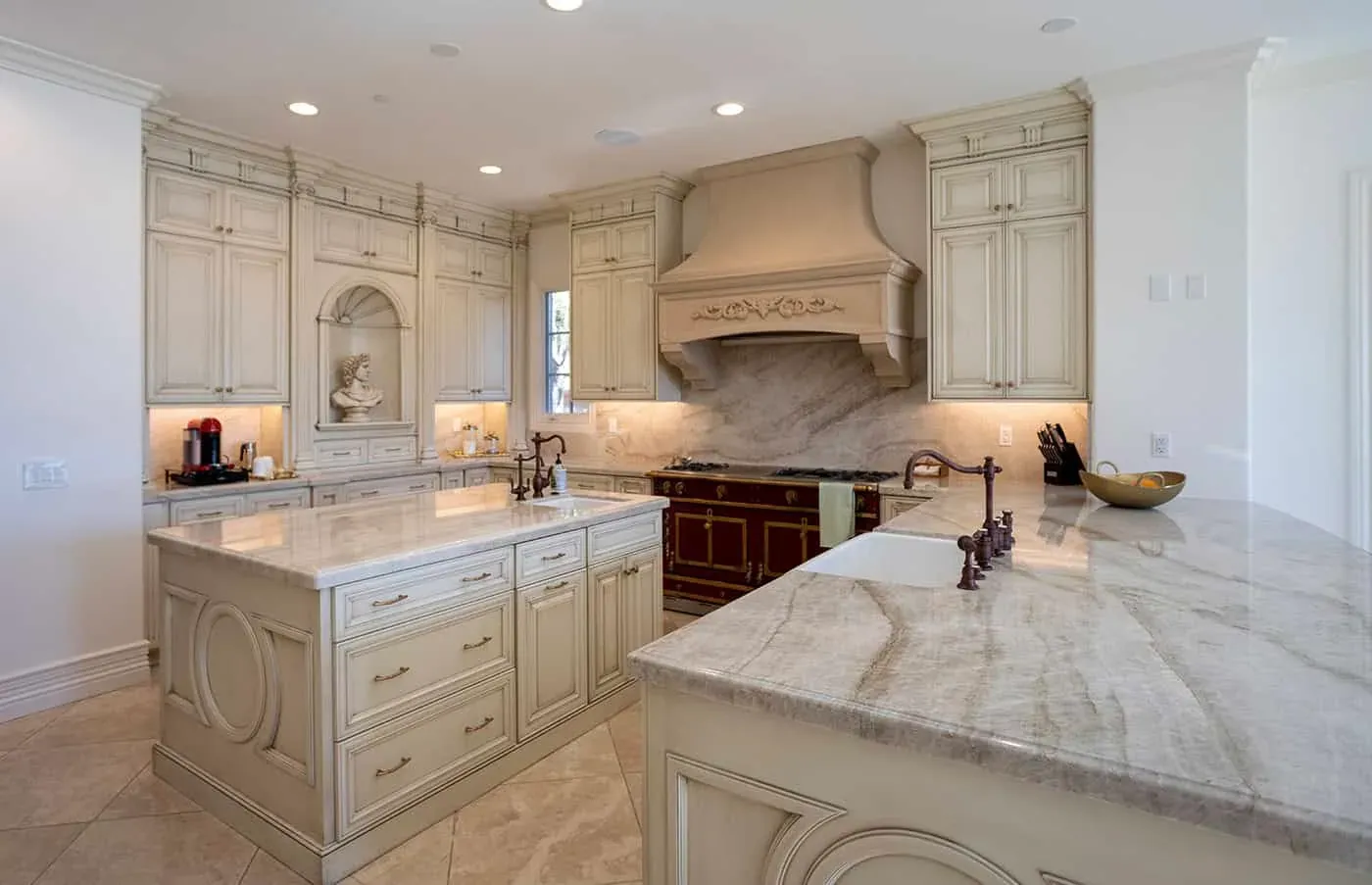
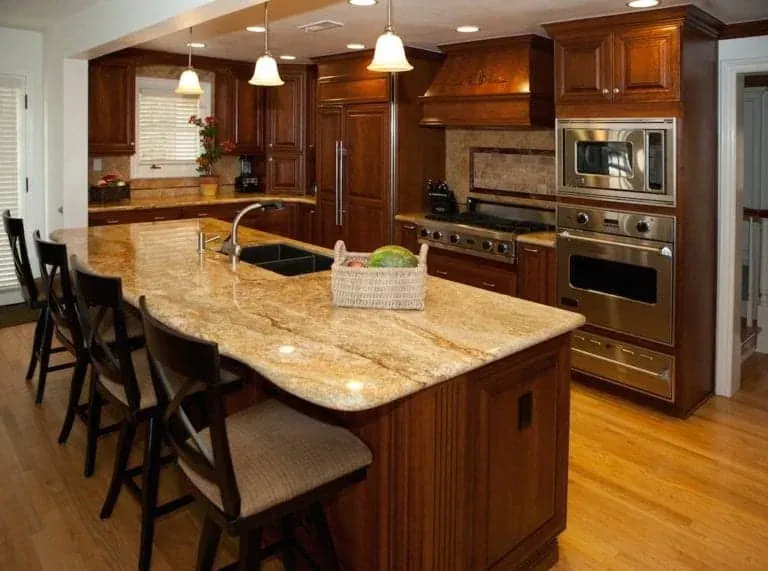
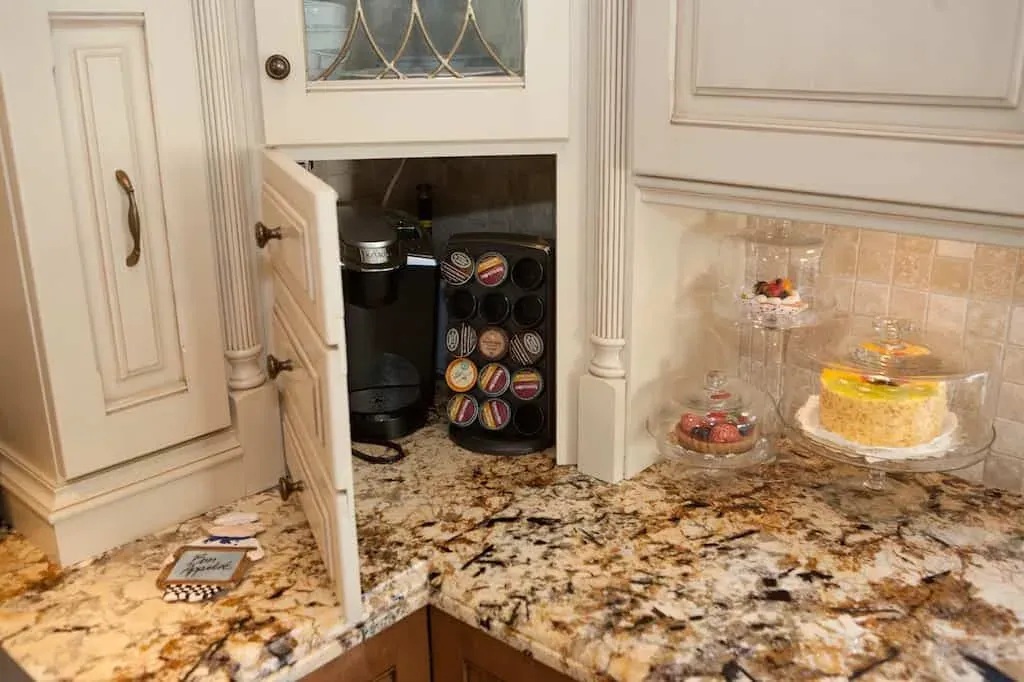
Quartz countertops are made in a factory. MSI, maker of Q Premium Natural Quartz, classes them as a man-made product of roughly 93 to 95 percent quartz and 5 to 7 percent resin by weight. The color and pattern are designed by the maker, so you choose from a collection rather than from what a quarry produced.
Cambria describes its quartz as nonporous and nonabsorbent, stain resistant, and never requiring sealing, polishing or reconditioning. The quartz lines in our showroom are Cambria, Q Premium by MSI, Silestone, Vadara, Viatera and Nouvel.
Quartz. Cambria says not to apply any sealers, penetrants or topical treatments to its product at all, because they wear off and leave the gloss looking dull or uneven. There is nothing to reseal.
Quartzite. The answer depends on the stone. Use Natural Stone explains that quartzites vary in porosity depending on how much metamorphism they went through. Its quartzite guide gives examples: highly metamorphosed stones such as Taj Mahal or Sea Pearl are tightly bonded, while White Macaubas and Calacatta Macaubas are more porous and will benefit from sealing. The care article suggests watching the area around the sink: if the stone darkens from water, it may need a sealer, or the existing sealer may be wearing. Your fabricator or stone supplier can advise on the right product for your slab.
Heat. Treat both with a trivet. Cambria says its quartz is not heat-proof and recommends a closed-weave hot pad or solid trivet. Cosentino says Silestone is heat-resistant but that sudden temperature changes can affect it, so trivets are highly recommended. For quartzite, the Use Natural Stone care article advises coasters, trivets and cooling racks.
Scratches. Quartzite is very hard. The same article quotes a fabricator noting that quartzite is so high on the Mohs scale that it could dull your knives, so use a cutting board for the knife’s sake. For quartz, Cambria notes that no stone surface is scratch-proof and that marks show more on monotone designs, so a cutting board is the rule there too.
Cleaning. Caring for quartzite, Use Natural Stone says, is similar to caring for granite: wipe it regularly with a gentle cleanser, water and a soft cloth, and wipe up spills and moisture quickly. For quartz, Cambria recommends warm water, a soft cotton cloth and mild soap, and lists harsh chemicals and abrasive pads to avoid. Silestone’s maker suggests neutral soap on a damp microfiber cloth, then drying.
This is the most useful thing to know before you buy natural quartzite. Use Natural Stone warns that some stones are sold as quartzite or “soft quartzite” when they are in fact marble or dolomitic marble. Its guide is blunt: there is no such thing as soft quartzite, and a stone labeled that way is most likely marble, which will etch from kitchen acids where true quartzite will not.
It also says that a stone’s country of origin, price or name is not a reliable indicator of what it is, and that marble and quartzite often cannot be told apart by eye. Instead it describes three simple checks:
Ask whoever supplies your slab about these tests before you commit. Engineered quartz does not have this problem, because it is a manufactured product sold under a brand and a design name.
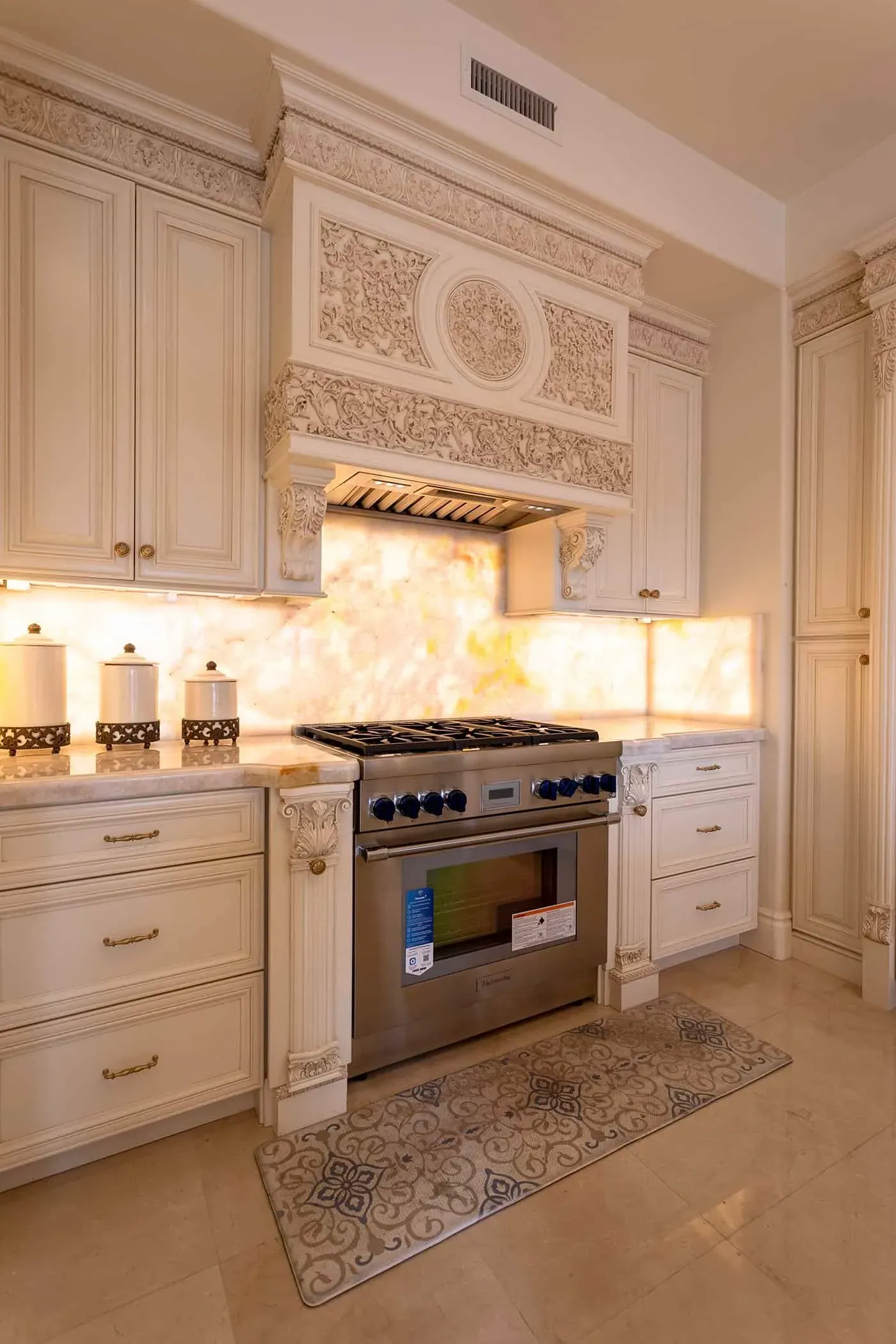
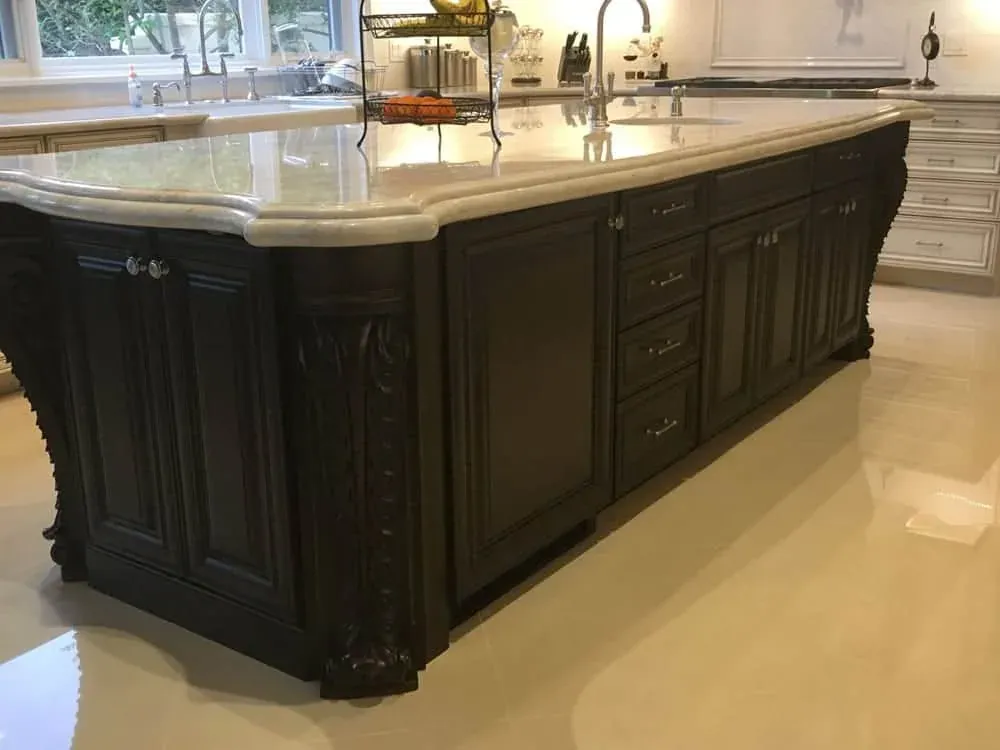
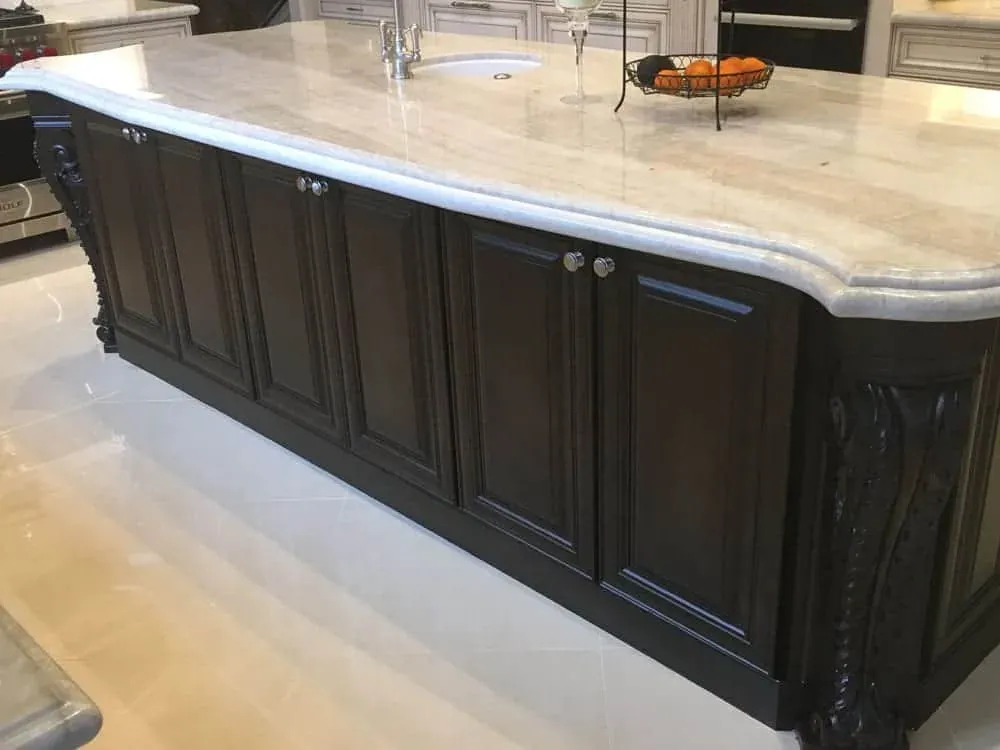
Quartzite gives you natural movement, often in soft whites and grays with flowing veins, and no two slabs are the same. That makes seam placement and how the pattern lines up across an island a design decision, settled at templating. Quartz gives you a designed pattern, chosen from a maker’s collection, and a more predictable result across the run.
We do not publish prices, but the things that move them are the same: the stone or design, how many slabs the layout needs, the seams, the edge profile, the cut-outs and any full-height backsplash. Use Natural Stone adds one quartzite-specific factor: because it is so hard, quartzite is tougher on fabrication tooling, so buyers can often expect to pay a little more for fabrication.
Choose quartz if you want a designed look, no sealing and the simplest daily care. Choose quartzite if you want a natural stone with a marble-like look and the hardness to stand up to everyday acids, and you are happy to check whether your particular slab needs sealing. If granite is also on your list, our comparison of quartz vs. granite countertops covers that pairing.
Whichever way you lean, a countertops project with us runs in the same order: you look at full-size material in the Anaheim showroom, we template in your home after the cabinets are in, settle seams, cut-outs and the edge, and the slab is fabricated and set by our own installation crew. The real dates are in your written proposal. To see quartz slabs side by side and talk through natural stone, book a showroom visit or ask for an estimate.
No. Quartzite is a natural metamorphic rock made almost entirely of the mineral quartz, quarried and cut into slabs. Quartz countertops are a manufactured product made mostly of quartz bound with polymer resin. They share a mineral, not a process.
It depends on the stone. The Natural Stone Institute's consumer site explains that quartzites vary in porosity: dense, highly metamorphosed varieties may need no sealing, while more porous ones benefit from a sealer. Quartz countertops, by contrast, are sold as never needing sealing.
The Natural Stone Institute's consumer site says caring for quartzite is similar to caring for granite: wipe it regularly with a gentle cleanser, water and a soft cloth, wipe up spills and moisture promptly, and use coasters, trivets and cutting boards.
The Natural Stone Institute's consumer site describes three simple checks. Real quartzite scratches glass, is scratched lightly or not at all by a knife tip, and does not etch from lemon juice or vinegar. A stone sold as soft quartzite is most likely marble.
Use a trivet on both. Cambria and Silestone both recommend trivets on their quartz, and the Natural Stone Institute's consumer site advises trivets and cooling racks on quartzite too.
2 min read
At Kitchen Cabinets and Beyond, we are dedicated to creating kitchens that blend elegance, functionality, and timeless style.
3 min read
Countertops are one of the most essential elements in any kitchen or bathroom. They provide a functional surface for meal preparation and storage and contribute to the space’s overall aesthetic.
3 min read
Kitchen remodels may be one of the top three most stressful types of remodels a homeowner can experience. Why? Well, for starters—it is expensive. Further, there is so much plumbing and electrical stuff to work around, many will put off a kitchen remodel as long as they can.